Are PU soles suitable for winter footwear?
Usually, when we choose footwear, we consider the season, comfort, as well as how it looks on our feet and what outfits we can wear it with.
With winter just around the corner, mid-season and winter boots are becoming particularly popular. But as the cold weather sets in, appearance alone is no longer enough. Shoppers are also paying attention to how slippery the shoes will be on ice and whether they’re comfortable to wear. We all want our feet to stay warm and for our boots not to get wet in the rain or snow. And, of course, we want them to last us more than just one season.
There are popular materials for the upper and sole, but certain preconceptions still persist regarding some of them.
The focus of our article, the PU sole, is one such example. It is lightweight, but not particularly popular for the winter season. Some shoppers still believe that if polyurethane is more commonly used for summer footwear, then it is most likely unsuitable for winter.
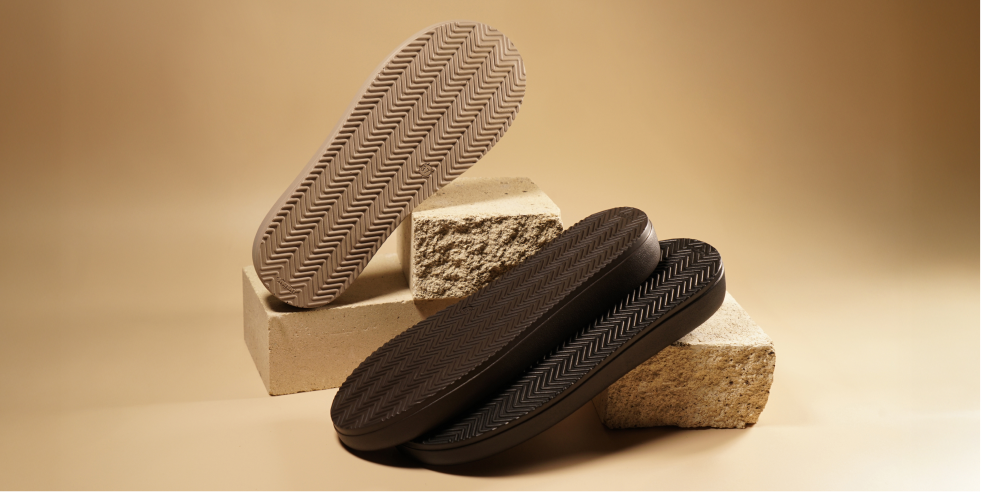
But is PU really only suitable for the summer season?
Shoe designers and manufacturers favour PU because of a combination of several key properties. The material is lightweight and highly resistant to abrasion, despite its porosity. And thanks to the formulation, the required characteristics can be tailored to suit the sole’s intended use.
The industry is currently developing very rapidly, alongside technologies and materials. Today, we already have functional, high-quality PU systems for winter footwear, designed for use at a range of temperatures.
The main trend in recent years has been for manufacturers to move away from the ‘one formula fits all’ approach. Our company also uses specialised systems tailored to specific operating conditions. For winter footwear, this means adding special components that influence the material’s properties at low temperatures, making it:
- softer;
- more flexible;
- more frost-resistant;
- less prone to cracking.
Depending on the specific PU system and its characteristics, the temperature range can extend down to -20 °C, and in some cases as low as -50 °C. For example, such solutions are developed for use in cold climates — in the Nordic countries and Canada — as well as for specialist footwear.
Our technologists, in collaboration with the material manufacturers, select the most suitable composition for the PU system depending on the season and operating conditions.
For winter models, our company uses a softer material. The softness of the material not only provides a feeling of comfort but also directly affects the flexibility and elasticity of the sole, as these characteristics are particularly important during the cold season.
This is significant even for our climate zone. Although our winters are generally mild and warm, temperatures in the northern regions can sometimes drop to between -15 and -25 °C. Therefore, when selecting a PU system, it is essential to consider not the abstract concept of ‘winter’, but the actual conditions of use.
I would like to add that it is not only the PU system itself that affects the behaviour and appearance of the sole.
Special ‘soft-touch’ paints are also used for the finishing of PU soles. Their formulation contains specific components. This coating produces a matt surface and a pleasant, almost velvety feel to the touch. As well as the aesthetic effect, the Soft-touch coating affects the grip of the sole’s surface, thereby reducing its slipperiness.
Our company also offers customers models coated with this type of paint.
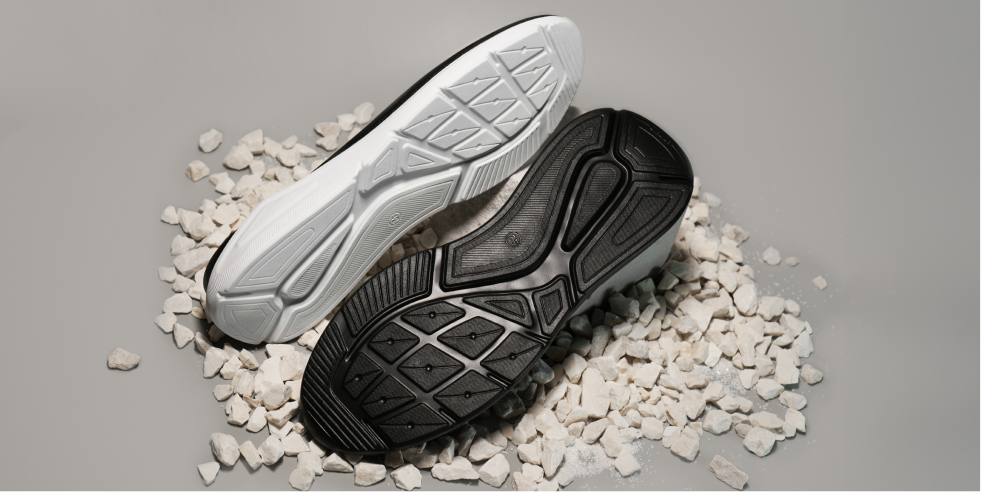
So, is PU suitable for winter?
Yes, a correctly selected PU system can be used in winter models, including for use in fairly low temperatures.
Therefore, the claim that polyurethane is generally unsuitable for winter footwear is too categorical and does not reflect the reality of the situation.
AC-Step’s technical specialists select the most suitable systems, which ensure the necessary flexibility and elasticity depending on the type of footwear and climatic conditions.
Our customers can be confident that the sole model they order will be suitable for use in temperatures as low as -20 °C.










.jpg "Стойкость в огне: как украинские производители поддерживают экономику в условиях войны")
