Most problems arise not because of the material itself, but due to incorrect storage, breaches in the bonding process, or a failure to take the specific characteristics of EVA into account. Our company’s specialists have prepared detailed recommendations to help you establish a flawless production process for creating high-quality footwear.
EVA soles should be stored in a dry, heated warehouse at an air temperature of between +14 °C and +25 °C and a relative humidity of 50–80 per cent.
Adherence to these conditions is essential, as deviations from the temperature regime can cause the material to shrink and deform. As a result, the sole may change its geometric parameters and no longer correspond to the specified size, which will negatively impact the subsequent production process.
Products may be stored:
on shelving;
on wooden decking in stacks no more than 1.5 m high.
The distance from the floor to the decking or the bottom shelf of the racking must be at least 0.2 m.
Cartons and crates must be placed no closer than 1 m from the external walls of the warehouse. Aisles at least 0.7 m wide must be maintained between racks, stacks and internal walls to ensure adequate ventilation and ease of operation.
Keep EVA soles at a distance of at least 1.5–2 m from heating appliances (radiators, heaters, fireplaces). This material has low thermal stability and may deform or shrink when exposed to direct hot air.
EVA soles must be protected from:
direct sunlight;
exposure to vapours and gases;
contact with corrosive chemicals.
Proper storage helps to preserve the shape of the products and their physical and mechanical properties, and ensures consistent quality during subsequent bonding and the use of the finished footwear.
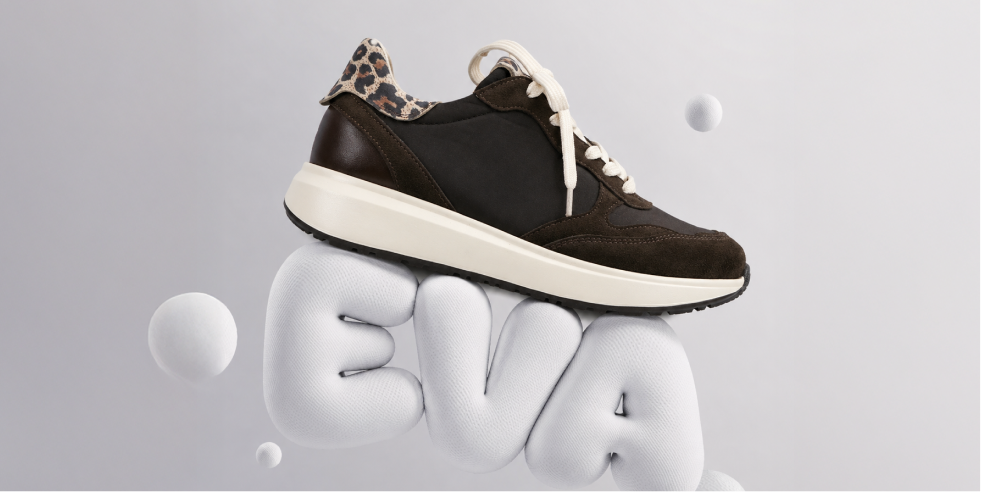
The manufacturing process for EVA soles involves a complex process of foaming and stabilising the material, which can result in minimal variations in the geometry of the components, even within a single item. This is not a defect, but a characteristic of this type of material.
This characteristic is permissible within manufacturing tolerances and does not affect the quality of the finished product, provided that the right and left soles are used as part of the pair specified by the manufacturer.
To minimise any possible discrepancies, at our factory each pair of soles is matched in pairs during packaging. As a result, the highest possible level of correspondence between the right and left halves of the pair is achieved, and the subsequent process of assembling the footwear is simplified.
Important: factory pairing of soles is not merely a method of sorting products, but a technological stage of quality control that helps to ensure an identical pair for subsequent shoe production.
We therefore recommend not mixing soles from different sets before beginning the gluing process.
How gluing technology determines the quality of the finished shoes
The quality of the finished footwear depends not only on the characteristics of the sole or the adhesive. Even the use of premium materials does not guarantee a reliable result if the preparation or bonding process is not followed correctly during production.
EVA material has specific physical properties, so the quality of the finished footwear depends to a large extent on adherence to every stage of the bonding process.
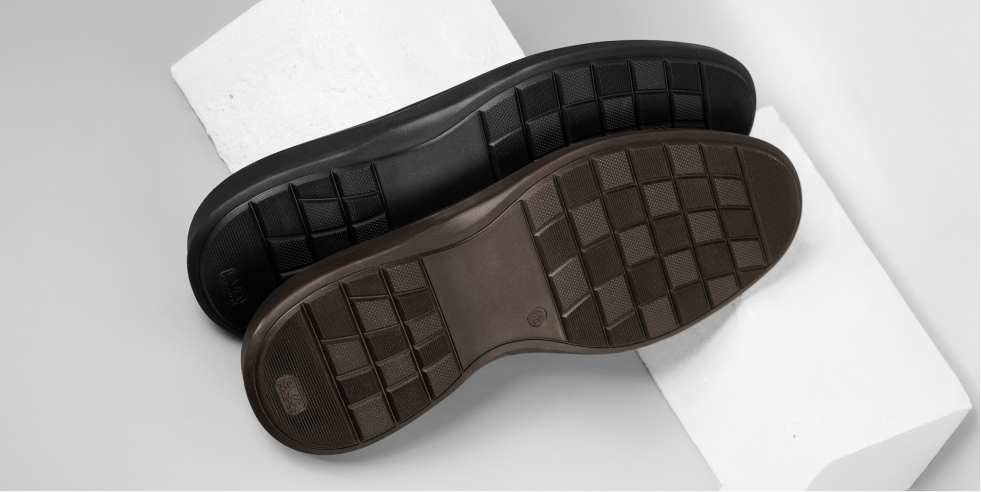
Please note that before applying the adhesive, the surface of the sole must be sufficiently rough. This texture ensures effective mechanical bonding between the adhesive and the material. It is also recommended to pre-treat the sole with a primer for better adhesion.
For reliable bonding of EVA soles, it is recommended to use polyurethane adhesives in combination with special primers or polychloroprene-based primers.
The primer ensures the necessary adhesion between the EVA material and the main adhesive, forming a strong and durable bond.
To ensure proper activation of the adhesive film on the sole surface, the recommended temperature range must be maintained throughout the entire process.
For EVA, it is best to use adhesives with an activation temperature of 45–50 °C. Failure to adhere to the recommended temperature range may lead to deformation of the material’s structure due to overheating.
It is also important to bear in mind the thickness of the product: thick soles will require a longer heating time than thin models.
This is precisely why it is recommended to use equipment that allows precise control of the heat flux for activation, such as conveyor tunnels or ‘Flash’-type activators.
The use of conventional ovens with heating coils does not provide sufficient precision in temperature control; therefore, their use is not recommended when working with EVA.
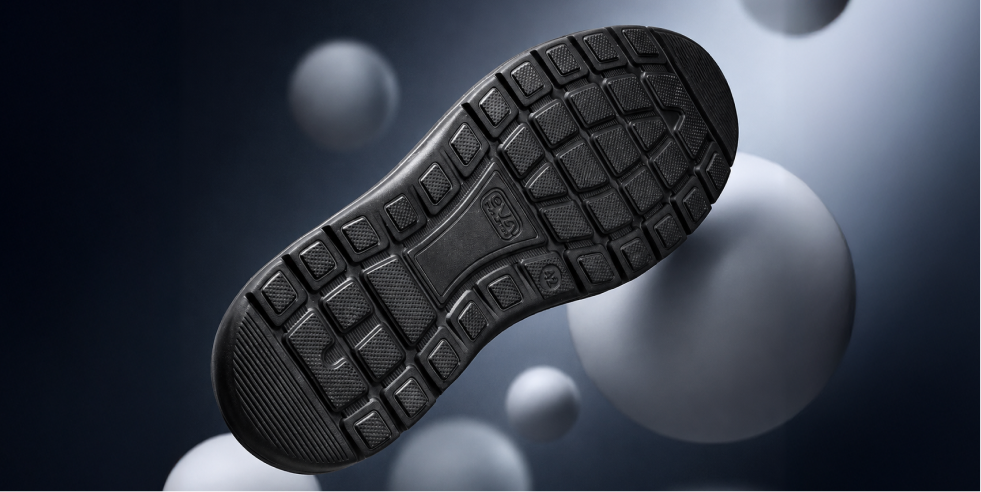
Immediately after activating the adhesive film, the parts must be joined without delay. The faster the sole is aligned with the blank, the higher the quality of the bond will be.
Once positioned, the pair is placed in the press. The optimum pressing time is approximately 7 seconds at a pressure of 2.5–3 atmospheres. However, the final parameters may need to be adjusted depending on the sole’s thickness, the material’s hardness and the technical condition of the equipment.
Professional production always takes into account the microclimate in the workshop. A temperature of 20–23°C and a humidity of 65 per cent are considered optimal. If the workshop is too hot or too cold, the equipment settings (activation time and pressure) must be adjusted.
Adhering to these guidelines allows you to maximise the benefits of EVA material, minimise the risk of returns and ensure consistent quality of the finished footwear. Even minor deviations from the production process can affect the final result, so every stage — from storage to pressing — is equally important.










.jpg "Стойкость в огне: как украинские производители поддерживают экономику в условиях войны")
